
- Website
- orpc.dev
- GitHub stars
- 5.8k
- Social media
- @middleapi
About oRPC
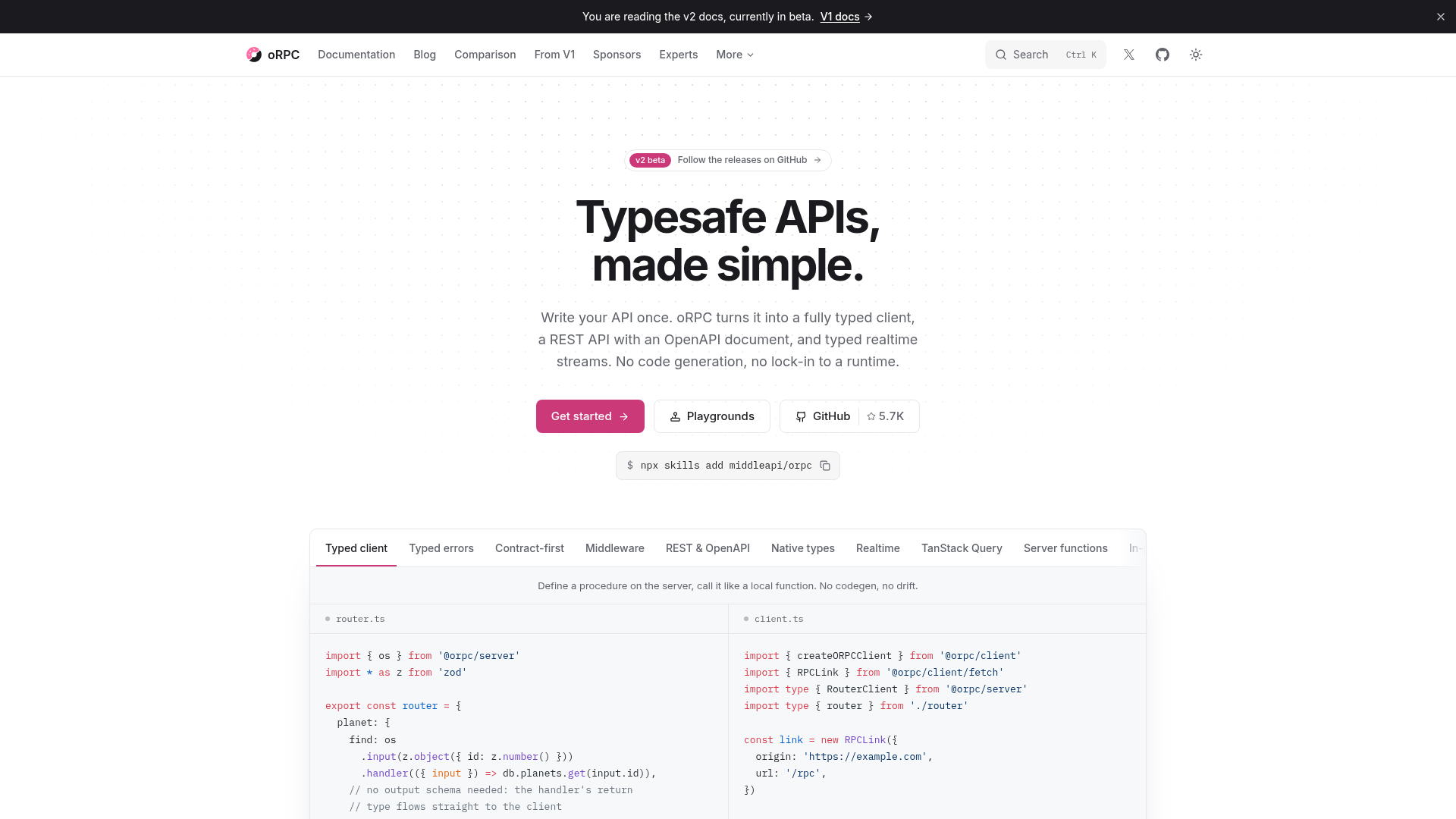
oRPC helps TypeScript backend and frontend teams build APIs with a shared contract: the server router supplies types to clients without code generation, and can also produce REST endpoints and an OpenAPI document. It combines typed RPC calls with an HTTP-facing API, so the same procedures can serve both.
Key Features
The contract can define data shapes and behavior for both typed clients and outside consumers:
Typed client
Calls mirror the server router, with input and return types inferred from handlers.
Contract and typed errors
Define inputs, outputs, and declared error variants so client code can handle known errors by type.
REST and OpenAPI
Add method and path metadata to procedures, then generate an OpenAPI document from the router or contract.
Middleware
Inject context such as an authenticated user; handlers receive it with its type checked.
Realtime streams
Expose typed streaming procedures alongside HTTP and WebSocket transports.
Worth Knowing
Check these implementation details before choosing a version or client runtime:
Who It's For
Best for TypeScript teams building internal APIs, shared frontend-backend clients, or REST APIs that need generated OpenAPI documentation.
Alternatives to oRPC
See all →


oRPC Reviews
No reviews yet. Used oRPC? Be the first to review it.